
Introduction
Leishmania parasites are vector-borne protozoa transmitted by sandflies, with a wide distribution across tropical and subtropical regions. In research and surveillance contexts, the need for rapid, scalable, and field-deployable screening tools is critical. Traditional methods such as enzyme-linked immunosorbent assays (ELISA) and polymerase chain reaction (PCR) remain essential for confirmatory detection, but they require laboratory infrastructure and specialized staff.
Leishmania antibody rapid diagnostic tests (RDTs) offer a complementary tool that fits at the frontline of research workflows. By providing immediate serological information in the field, they support large-scale population screening, outbreak mapping, and longitudinal monitoring of intervention programs, while reserving resource-intensive confirmatory assays for targeted subsets of samples.
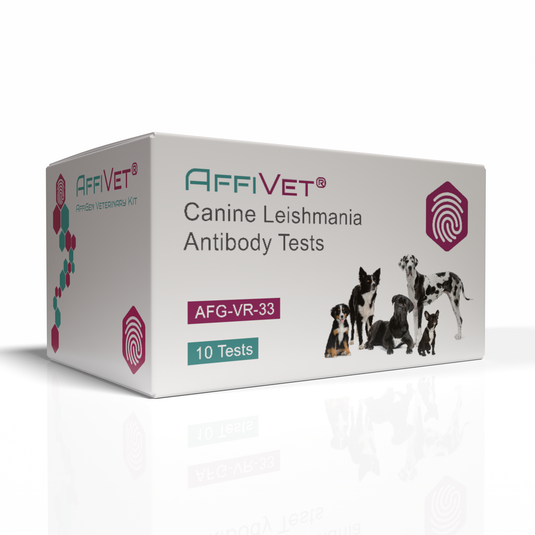
Principle of Leishmania Antibody Rapid Tests
How the assays work
Most rapid tests for Leishmania are lateral flow immunochromatographic assays. They rely on:
-
Immobilized Leishmania antigens (often recombinant proteins such as rK39).
-
Capillary-driven migration of serum, plasma, or finger-prick blood.
-
Visible line formation where host antibodies specific to Leishmania antigens bind conjugated particles.
Key performance characteristics
-
Speed: Results available in 10–20 minutes.
-
Sample type flexibility: Whole blood, serum, or plasma.
-
Field suitability: No need for electricity, refrigeration, or advanced equipment.
Antigen considerations
-
rK39-based assays are widely used but show variable sensitivity depending on geographic parasite strains.
-
Newer designs explore multi-epitope antigens to improve coverage in diverse regions.
Multi-Step Workflow Integration
Step 1 – Field screening with rapid tests
-
Conducted in field stations, mobile laboratories, or community centers.
-
Used for initial seroprevalence mapping in large cohorts.
-
Provides immediate triage data for deciding which samples should move to confirmatory testing.
Step 2 – Confirmatory ELISA
-
ELISA provides quantitative antibody detection with higher sensitivity.
-
Useful for sero-epidemiological analysis, including antibody titers and population-level patterns.
-
Provides a stronger basis for linking seroprevalence to risk factors in surveillance studies.
Step 3 – Molecular confirmation with PCR
-
PCR-based methods detect Leishmania DNA, ensuring the highest level of specificity.
-
Essential for distinguishing true positives from cross-reactive antibody results.
-
Provides information on parasite species and strain diversity, valuable for epidemiological tracking.
Step 4 – Integration into surveillance databases
-
Results from RDT → ELISA → PCR are layered into centralized epidemiological systems.
-
Enables real-time mapping of hotspots using geographic information systems (GIS).
-
Supports predictive modeling for outbreak forecasting and intervention planning.
Research Applications
Large-scale surveillance studies
-
Rapid antibody tests make it feasible to screen thousands of individuals in resource-limited settings.
-
Allow researchers to estimate seroprevalence across regions without transporting all samples to central labs.
-
Data can be integrated with environmental and entomological data (e.g., sandfly density, climate factors).
Outbreak detection and spatial mapping
-
During suspected outbreaks, RDTs help identify clusters of recent exposure.
-
Combined with GPS mapping tools, they reveal geographic transmission zones.
-
Early detection helps prioritize confirmatory testing and focus vector control measures in high-risk areas.
Monitoring intervention and treatment programs
-
Although antibody detection does not differentiate active vs past infection, serial testing in populations allows researchers to track trends over time.
-
When paired with confirmatory ELISA or PCR, RDTs help evaluate:
-
Effectiveness of vector control programs.
-
Longitudinal impact of mass drug administration or community interventions.
-
Residual transmission risk in post-intervention settings.
-
One Health approaches
-
In zoonotic cycles, rapid antibody tests can be applied to canine populations, supporting integrated human-animal surveillance.
-
This strengthens cross-sector collaboration in areas where animal reservoirs play a critical role in transmission.
Advantages of Rapid Test Integration
-
Scalability: Capable of screening entire communities in a short period.
-
Field adaptability: No specialized equipment needed.
-
Cost-effectiveness: Only a subset of positives require higher-cost confirmatory assays.
-
Real-time results: Facilitates immediate public health decisions.
-
Data synergy: Easily integrated with mobile apps and GIS systems for instant epidemiological mapping.
Limitations and Considerations
-
Antibody persistence: Cannot distinguish between past and current exposure.
-
Geographic variability: Sensitivity of rK39-based assays may differ across endemic regions.
-
Cross-reactivity: Non-specific antibodies may generate false positives.
-
Need for confirmation: Positive rapid tests must always be followed by ELISA or PCR to ensure accuracy.
Practical Workflow Example
A typical surveillance workflow might follow this sequence:
-
Community screening – Deploy antibody rapid kits across multiple villages.
-
Data collection – Record results with mobile-based data capture linked to GPS coordinates.
-
Sample selection – Forward positive (and a subset of negative) samples for confirmatory ELISA.
-
Molecular analysis – Use PCR to characterize parasite DNA from confirmed samples.
-
Database integration – Enter multi-level data into a central surveillance system.
-
Epidemiological modeling – Map hotspots, analyze transmission trends, and support outbreak response planning.
Research Value for Scientists
For researchers designing epidemiological studies or surveillance projects, Leishmania antibody rapid tests offer:
-
A frontline tool for initial serological assessment.
-
A method to reduce laboratory burden, focusing confirmatory testing where it is most informative.
-
Rapid data streams that enhance outbreak mapping and intervention planning.
-
An applied perspective on integrating field-friendly tools into large-scale workflows.
Conclusion
The integration of Leishmania antibody rapid testing into research and surveillance workflows provides a powerful complement to ELISA and PCR. By positioning rapid kits at the frontline of screening, researchers can achieve wider coverage, faster data collection, and more efficient use of laboratory resources.
When combined with confirmatory assays and integrated into epidemiological databases, rapid antibody tests enhance outbreak detection, treatment program monitoring, and One Health surveillance. Their role is not to replace laboratory methods, but to extend the reach of research projects, ensuring that large-scale surveillance efforts remain both efficient and scientifically robust.